Saturday, 7 March 2015


2014, n. yorkshire: water falling | dead rabbit | fast river | after a no. of miles | graze | coffee | pint of ale | fluffy dog | jet zoom |
2014, liverpool: coffee in a victorian cafe | this sort of thing helps | I'd like to re-arrange several of my only testicles tiddley pom to a jaunty tune | all of the light | eyes filling with the usual fluid | this chair is somewhat fuckin a metaphor and so is this drawing of it as well as one heartrending snatch of nostalgia c.. 1995 |
2014, midlands: outdoorsy tired cyclist body (from less than only 50 miles) sun'kissed' windblasted bit stiff but bit limber and roughnready styled quickstrip reveals veincords up arms legs hips tan tines and snugclothes pinchedlines, esp. thighs. all of the food means tum is kinda broad, head looks easterislandesque, bod hair almost slicked time for a shower
2014, w.sussex: lying on croquet lawn in my undercrackers | weeping willow whilst memory of moving here 22 years ago makes the usual fluid fill the eyes briefly
2014, e.sussex: nature effaces the grid | the 2nd person singular (always) |

Sunday, 22 December 2013

Annotations. A6. pp.1-24.


(1) BOOZE.                UTTER BOOZE.

(2)                             4-T.S. [4 tine spork]
                                4. S.T. [ 4 slice toaster]
1.5L.K. [1.5 litre kettle]     T.C.K. [Turkish coffee kettle]
(3) ABrade
     CoulDn't be arsed
     EFfing heck
(4) Gammy Hammy
     I Just need a little sit-down
    KilL me now.
(5) MeNaced
    OPening time
   Quite Right too
(6) STandard issue
    UnVarnished
   WaXy walnut lump
  Ya Zis is correct

(7) this blasted tree on a hill.
    that blasted tree on a hill.

(8) 2 memories:
a curtain depicting cowboys and indians in a western landscape. Was it stylised spare pictograms in faded colours, or a primarycoloured cartoonish graphic crowding of jolly images? Our bedroom window (it was bow-, with bench seating space for stash'neath) curtained brightly, yes, a 1970s British skit on The West.
Chuck Heston's caravan curtain in the Greatest Show On Earth a more Americana-than-thou instance of the same myth imagery. His coffee-heating , talent-handling (and snogging), private space separated from the child-awe bustle of carnie-life by that layer of child-awed set of symbols as folk art soft furnishing.

(9) A GODHILL ALLOWING FOR ALL SORTS OF NATURE SYMBOL WORSHIP RITES.
--
RIGHT
FOOT
STRAIGHTER
AND MORE
EVENLY
PROPORTIONED
THAN ANY
FOOT
OUGHT BE.
WITH BEAUTY
SPOT ON THE
LITTLE. OOH
LA LA.

(10) a tent on a hill from which one can strike out to perform local rituals or shelter from punishments meted out by capricious gods of that jurisdiction.

(11) mug of tea hitting the spot.

(12) THE OLD DRAWING CLAW.
--
romantic montage of c-u's a
la D. Sutherland
   J. Christie
in DON'T LOOK NOW               cept Diplodicus'[i]

(13) um.er. urgh.
er. grrh.
um, eehk.
several one washer(s) to bind them all.

(14) AFFIX.
1. HAT
2. L.SLEEVE
3. L. TREWS [& c-b. boots]
4. see 2.
FIND AND REPLACE
SPATULATE.    LEFT WING
                          = DESERT

(15) V.MATURE 2. I DONT WANNA BE A BEAR. 1. YOU ARE A BEAR.

(16) really
       rather
       decor
       ative
      porchframe

(17) PAINTED SHINGLE.
FOLKED   cola   WOODEN
PLAIN     de        TOOLED
PRACTIC milano DECORA
AL                       TIVE

(18) Fig. (a)   something
              (b)
              (c) something else
              (d)
              (e)   Figs (a)-(e) FRAMED
                                       THING
                                       S IN FR
                                       AMES

(19) SELF PORTRAIT IN THE NIP WITH BURGEONING QUATERMASS LIMBS.
POSSIBLY APPLYING COCONUT BUTTERS TO SUNBURN.[c.&b. unq'd]
WHILST LISTENING TO JOY DIVISION.
'SHE'S LOST CONTROL AGAIN' WHERE 'SHE' COULD MEAN MY MUTANT ARM(S).
PHYSIO INSISTS MY QUADS ARE TOO DOMINANT.
IS "TOO DOMINANT" LIKE SAYING "THIS KEBAB IS TOO GREASY?".
BAD EXAMPLE.
  
(20) SHINGLED AS WOODFACED ARMY
OF BEARS, CATS OR SUCH LIKE.

(21)                                                              THE UTTER QUADRANT
CONGRATULATIONS. THIS IS THE 2MI
LLIONTH GLASS OF
BEER YOU HAVE SKETCHED.
YOU WIN A GLASS OF DARK STAR A.P.A. TO SKETCH QUAFF             

(22) IDONTWANTTOBEABEAR
YOU ARE A BEAR
IN THE WOODS.
BUT NOT CURRENTLY PERISTALSIS.
OTHER WAYS OF MARKING TERRITORY INCLUDE
SIGNATURE WOODWORK          FIT A FANCY DADO RAIL

(23) OH STEPHEN.
OH ENABLER OF STEPHEN.
--
THIS SORT OF MIDR
IFF C-U USED A LOT
BY J.F. IN T. SEARCHERS.

THE DUKES GRACEFUL
HANDS APT AT HARSHNESSES

(24) Bears I don't want to be either.
        But am.

GRIZZLY BEAR. BLACK BEAR.
B E A R BEAR B E A R BEAR
blue branchy crossing out maybe       

Sunday, 25 August 2013

American soul in less than 237 pages/years (an equation in hunt for the Great American Novel(la))

1776 = Y= 1; 2013 = Y = 237

Y= 74
pp. = 180
The Scarlet Letter / Hawthorne

Y=118
pp. = 128
Puddn'head Wilson / Twain

Y = 104
pp. = 176
Washington Square / James

Y =137
pp. = 128
O Pioneers! / Cather

Y = 149
pp. = 218
The Great Gatsby / Fitzgerald

Y = 163
pp. = 192
The Day of the Locust / West

Y = 175
pp. = 214
Catcher in the Rye / Salinger

Y= 176
pp. = 224
The Natural / Malamud

Y = 180
pp. = 128
Seize the day / Bellow

Y = 188
pp. = 96
77 Dream Songs / Berryman

Y= 194
pp. = 190
Desperate characters / Fox

Y = 199
pp. = 236
Ragtime / Doctorow

Y= 204
pp. = 219
Housekeeping / Robinson

Y = 206
pp. = 224
Dead-eye Dick / Vonnegut

Y = 208
pp. = 176
Democracy / Didion

Y = 212
pp.= 226
Tracks / Erdrich

Y = 218
pp. = 160
Black Water / Oates

Sunday, 10 March 2013

The human banjo, plucking himself from obscurity


Cole Porteresqscatology (Cole Pordure?)
[to a jaunty tune with a debonair vocal]

what comes out the bum
it used to be yum
a change that just flum
moxes me


************

Tarte tatin tourrettes

Roll out pastry, prick.
Brush with eggy wash, twat
repeat a minute later
smear with apple sauce
arrange fan of thincut apple slices
brush with melted butter
sprinkle with caster sugar
25-30 mins baking, 1 hour cooling
crème fraiche and cinnamon
wanker
wrong recipe, bollocks.

Thursday, 15 November 2012

In the event of death all body parts up for donation

Heart. Must be a good ol goer, one careless owner.

Liver. Deserves a medal.

What are kidneys for again?

Those bits in eyeballs that are all the rage. Take the bags underneath too.

Enough body hair to save several terminally understuffed sofas; pubic, to regenerate the merkin market.

Feet, hands: spare parts for paddleboats; ashtrays; umbrella stands?

Friday, 29 June 2012

I - aye, I'd eyed - Self-portrait as Velasquez's 'Mars'


I wake up with no memory of who I am. A card in my pocket with a name on it. I google the name.

There are three candidates for me.

1. An apparently unambitious artist with no evidence of a career in the past or future.
2. A dull-sounding librarian (is there any other kind?) working at a library at an institute at a university. Why so many 'ats'?
3. A cage-fighter.

I think I must be the cage-fighter. I feel like I have had many injuries, that this body is a patchwork carcass of wornleather over scar-tissue and gristle. I can imagine the violent rage nurtured in a boy with a softy first name. Maybe I escaped from my cage in a post-fight stupor looking for somewhere to lay me down, to find some place less cagey.

Friday, 3 February 2012

Travel observations from somethen (not rightnow)

It's the tourist equinox, the out-of-season/season cusp.

Saturday influx, tentative but obvious.

And now they come. It is Saturday 11am and the Electra Palace Hotel has its new season flock. 20 mins ago just me and the fisherman. Now, in twos, fours, and now sevens and eights, treading on sand 'n' pebbly beach like they're on the moon. First, tentative steps, checking the gravity, the footing – they may float off or sink in. A few sunbeds finally off their sides, their six-months anti-spooning becomes hybrid-missionary, accepting swim and seared sleepers and hatted sunglassed readers. Rare kid, spitter in the sea; checking what? Its acceptance or rejection of same or different (a foreign agent or a common element) – maybe the whole sea is spit. And piss. And sweat.

How long 'til a few bars open? I give them 20 minutes, 30, tops.

Old local woman prowls, senses photo opp. Practiced disregard – give em what they want. Mars icecream trucks urgent. Trucks with fresh new plastic outdoor furniture – urgent – on a mic!


Saturday, 5 November 2011

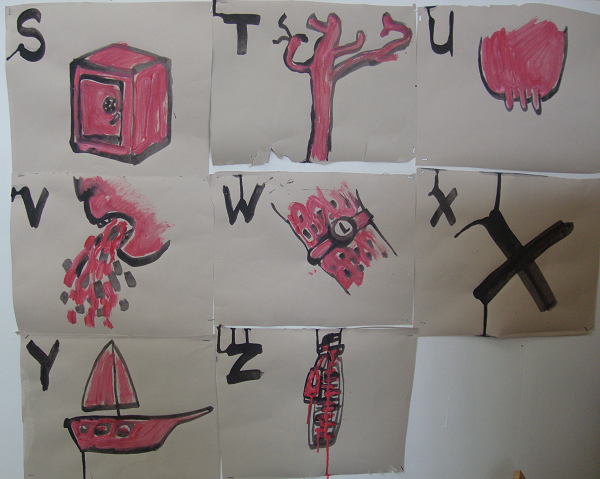
S to Z

safe / tree / udder
vomit / watch / x
yacht / zip

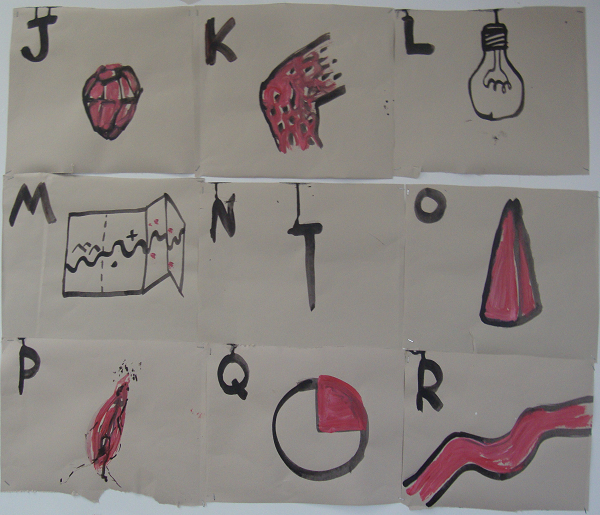
J to R

jewel / knee / lightbulb
map / nail / obelisk
pussy / quarter / river

A to I

arrow / balls / cock
door / egg / foot
gate / heart / insect

Friday, 15 July 2011

Treey

Of Unclaim (or Given). Oil on canvas. 198cm X 110cm.

2 trees, or 1 tree and its shadow (or memory),
Or 2 shadows (or memories) of 2 trees, Or
2 shadows (or memories) of 1 tree,
Or 2 shadows (or memories) of no trees
Or 2 memories (or shadows) of 1 memory of 2 trees
Or...

Saturday, 28 May 2011

Tick/Tock / Now/Then


Again, my reviews come late. But what is lateness but a deferred present.

The British Art Show 7 is touring so my day at the Hayward a few weeks ago is not too out of date, and I did take a few notes, mental and otherwise, so anyway...what was there and what did I think of it?

Seeing this exhibition, as a snapshot of where British Art is at right now (not alternately titled Now That's What I Call Art 2005-2011!), according to the curators anyway, I was encouraged by the presence of drawing and painting, alongside the expected YBA influence, heavy with readymades. A sense of narrative is the other noticeable feature running through many artists' work.

George Shaw's austere urban wastelands in Humbrol enamel paints, sensitive but they not only depict but embody a lack somehow. Maybe just cos they depict Covva.

Alasdair Gray's simplicity of image, drawings worked on in the 1980s returned to in the 2000s, sophisticated but they leave me cold.

Phoebe Unwin's painterly intriguing images are more my cup of tea, playful and enigmatic.

The star of the show though and something I've been gagging to see for a while, having missed its earlier showings in other venues is Christian Marclay's Clock. This is film art comprising a 24-hour montage of short clips mainly from well-known motion pictures each clip hinging minute-by-minute on reference to the actual time.

I decided to treat it as a feature length matinee showing, by my timepiece (clock on mobile phone - 3mins slow) between 12.10 and 1.40, then popped back for some more in the build-up to 3.10pm. As a viewer you start to fall into a sort of obsession with the time. Mundanity and drama play out but always with the presence, foregrounded and emphasised or tangential and backgrounded, of a succession of time-pieces and time-tellers. Highschool classroom clocks, train stations, waiting rooms, tannoy announcements, clock-watchers of the world unite.

It's all there - death, sex, pain and joy. Also waiting - waiting for trains, for appointments, for rendezvous with fate, or just the seep of time through the cracks between events. Time that people want to stop, defer, speed up. Drive, Eat, Drink, Wait.

There is a strong sense of time as implacable, democratic, multi-denominational (images of Judaism and Islam are juxtaposed).

The playfulness of the montage creates a series of unwitting collaborations from a dream cast : Jason Statham, Isabelle Huppert, James Mason, Klaus Kinski, Julian Sands, Roger Moore, Dirk Bogarde, Paul McArtney. TV gets in there too with ER, a time of death being called, also more than one McGyver, and Columbo (alibis rely on pinpointing and questioning of time), and The Prisoner. The Kevin Bacon game has perhaps been made even easier by this project. There are glimpses of Anthony Hopkins in at least four different decades. Time marches on. The ageing process is remorseless and recorded.

We have clips from the great clock-watching movies - The Taking of Pelham 123, 3.10 to Yuma. It becomes a rather brilliant movie criticism seminar with a loose anecdotal mashed-up style, shamelessly slipping from originals to their remakes: Glenn Ford or Russell Crowe? Glenn Ford please. Also cut in are some of the greatest hits of clock referencing - we have Orson Welles as The Third Man in Vienna give his cuckoo clock speech.

Sound editing juxtapositions and elisions have an impact too, soundtrack bleeds from one clip to the next. In one sequence of intercuts, implicating Woody Allen in Shaft's trailing of a suspect. The humour and drama and the wonderful happenstance that the mix of disconnection of narrative and pure chronological connection builds is rather beautiful and witty, and oddly moving.

This is a rare piece of work, elegant and profound (and funny), resonant in the act of viewing it and afterwards like a layer of thought around one's lived experiences. I've never been a watch wearer and as a late adopter of mobile telephony my own sense of precise(ish) time has always been snatched naturally and loosely from glimpses at public clock-faces, the station, the clock-tower, the cafe, the pub. The film struck me as the ultimate cinematic version of how I've experienced time, its dual nature, both the precision of it and its looser interminable unwinding.

If the internet and its infinite hours of frippery is for anything, there should be space for this, on non-stop real-time streaming. For other casual fans of the real-time there's this.

Monday, 4 April 2011

Wavey Cavey

'Cave of Forgotten Dreams' (Werner Herzog, 2010)

A cave is discovered in 1994 in a secluded part of southern France. It is found to contain paintings, in fact the oldest paintings ever found. 16 years later Werner Herzog is allowed exclusive permission to film there in short and restricted sessions for a one-off series of shoots over a few Spring weeks in order to make a feature documentary.

The exterior landscape of the region surrounding the cave find is like something out of Caspar David Friedrich, romanticism light and splendour; the interior landscape is a time capsule, untouched in over 20,000 years, and now safeguarded from the outside and analysed from carefully installed gangways by a group of scientists nicely prone to French intellectual whimsy.

I’m always drawn to primitive imagery, fluidity and audacity of mark making – the merging of abstraction, figuration and stylisation – so scanning across the images themselves is the highlight of this film. Herzog has eccentrically decided to film in 3D, and I think there are signs that he wanted the humour of this to be on the screen. There are no speedboats flying towards us, or disembodied eyeballs wobbling through the air at us (Jaws - 3D was the last time I saw a 3D film, though I've heard that the Piranha remake is destined to become a classic - we'll have to see if Herzog makes a bikini film), but what works in this format is quite funny in itself. There is a certain frisson in the camera’s gliding over the textured cave floor. But elsewhere it is a distraction (hands flap strobingly in and out of the primary plane of vision from off camera), a colour deadener, a tonal nuisance – wearing shades in doors? I’m not fuckin Bono.

The illusion of depth perception using 3D mostly reminded me of those miniature theatrical dioramas made of card with foreground, background and other elements slotting one in front of the other, essentially a series of 2D cut-outs staged at different distances. On-stage you may need ‘flats’ but on screen they appear more artificially rendered than normal moving images. ‘Normal’ cinematography in combination with the wonderfully complex and imaginative organ that is the human eye (actually a pair of them helps) and you don’t need 3D. Some moments come off like a piss-take of 3D effects, woah! - a prominent upthrust chin; oooh! – a paleontologist’s unconvincing spear-thrusts at the camera.

The choice of 3D acts (knowingly, I think) as a compliment to the spatial representations of the cave art, and I think that this is a deliberate parallel being drawn (favourably to the art that has endured) between the faddish marvel of 3D in cinemas and home entertainment and the first representational realism in mark-making. Presenting the first and the latest together, tools of prehistory and the tools of modernity, which gets the plaudits? These technologies, separated by 35,000 years, one resonates and endures, the other distracts faddishly. The movement and energy in the lines on a cave wall pisses all over the overlapping stage-flats of 3D. The interplay of plane and depth through flickering torchlit images on a contoured cave wall with (or versus) 3D mechanical artifice. The very term 3D is misleading - the stereoscopic holographic visual effect of seeing different angles of an object to form a complete view of it is not acheived in my opinion - just overlapping flatnesses.

With my painter’s brain engaged, I wondered whether I’d have hacked it as a paleolithic muralist. You could see how the raw materials and the sensibility of the artist combine, and the skill of the artists, some collaborating 28,000 years ago with their predecessors of 35,000 years ago (coming back for the remake 7,000 years after the original). The contours of the cave wall, informing the sense of line and negative space, in dialogue with bear-scratch scraffito, charcoal chiaroscuro. The paintings all depict animals, recognisable and descriptive of a Disney-fest of biodiversity in the region – wooly mammoth and rhino, lions, antelopes, bison, wild horses. The artists saw everything side-on (reminded me of ambidextrous golfers lining up a putt, seeing all putts as curving inward), in silhouette but not static, in the side-on directionality there is movement, legs straining in fight, or multiplying in flight. Side-on chosen as the best aspect for this directionality and to capture the essence of the depicted beasties; an artistic choice like a film director's choice of camera angle and framing.

The thought occurs to me too that sports TV in 3D generally features men running sideways across the screen (pointless in 3D). The prehistoric celebration of bestial prowess in side-on action on these cave walls compares well on nearly every level (we just don't know the score is all) to modern satellite TV-driven worship of athleticism and rugged ball-hoofage.

In another section of wall, there are red dots, palmprints of one abstract colourist. Was this audacious and profound, the marks of an independent? What artistic freedom did these artists get? - were they commissioned illustrators, rebels, specialised outsiders inside their tribe, shamans channeling the spirits of the natural world that they pictured? Again, and again, the answer is that we just don't know. The evidence of the work on the wall though: stylization, figuration, abstraction, painting (tone), drawing (line) – it’s all there. What seems remarkable to me is what isn't there: that in the gallery of primitivism in these examples there are no childlike scribblings, stickmen or random daubs. Though I enjoy the ego-less simplicity in that sort of imagery, this cave art is sophisticated and relatively refined. Most impressively, whatever the merits of primitivism vs. sophistication, it is just bloody marvellous that the earliest paintings ever found aren’t a load of crap – must have been a relief to all.

I enjoyed the various interview segments too and Herzog’s own deadpan narration. The interviewed experts, intellectual specialists all (nearly all) are not po-faced (I wondered what the film would have been like if they’d made this momentous discovery in Yorkshire), and halfway in it takes a comedic turn, with progressively more eccentric takes on analysing these cave paintings. The master-perfumer–cum-cavity-sniffer (the aroma is attenuated don’t you know), and the experimental archaeologist-cum-eskimo-flautist-novelty-act. Through them the film cleverly acknowledges how art, archaeology, history, cinema (culture!) centre on interpretation and individual response – the isolated personal finite meaning of an artefact (whether a product of cameras, eye and hand) is intangible, how the impulse to explore and invest meaning in the world must be close to the meaning of humanness. These all seem to add up to "how little we really know, how much to marvel at”. ...er, I hope that didn't sound Creationist at all...

I like a fanciful metaphor in a philosophical summation as much as the next man (in fact, quite a bit more than the next man I reckon), and Herzog pulls out a beaut in asking the question in reference to the mirror of prehistory provided by these cave finds, that was on nobody’s lips exactly: wondering whether we are like mutant albino crocodiles dreaming our imaginary reflections in that cave… Nice one Werner!

We don’t know what the paleolithic artists intended or what was in their mind when they painted these images (‘Did they cry at night?’ Herzog wonders) – but that gap in knowledge encourages us to pour our own thoughts and theories, dreams and wonder into them. That’s humanness and probably mutant-albino-crocodile-ness too for that matter.

Monday, 28 March 2011

Watching the detectives (1971-1981)


Klute (1971)
The Long Goodbye (1973)
The Conversation (1974)
Chinatown (1974)
Night Moves (1975)
Cutter's Way (1981)

A film season (on the DVD player, not at an art-house cinema), some of my favourite films fit together really rather well. All produced over a decade in which American film, having asserted an artistic, challenging sensibility since the late 1960s with some daring, uncategorisable, personal films from awkward cinephiles picking up the new wave attitudes of European filmmakers, has one last hurrah before being swallowed up by the new-New Hollywood choppers of Jaws and Star Wars. Directed by creative young(ish) directors who emerged in the 1960s (Altman, Coppolla, Penn) and ex-pat Europeans(Polanski, Passer), these are American genre movies - detective thrillers. They all hark back to film noir and earlier detective fiction (one is period set, the others contemporary). Most of the components of those earlier fictions are intact in these films, but in tone they are definitely products of their own time rather than pastiche.

So Noir, and yet so far
Film noir is characterised by a shadow obssessed visual style and a tone of threat and suspicion. Characters find themselves trapped in an uncaring world. Though a sense of hopelessness and doom is common to noir, generally the classical noir and detective films ultimately reward the virtuous and punish the evil, studio movies of the 1940s and 1950s obliged by Hollywood's production code to adhere to upstanding moralistic conventions, even if such outcomes can appear rather arbitrary and out of keeping with the general mood of the films. The 1970s noirish iterations, freed from a moralising production code, allow the bleakness to bleed through to the bitter end. Endings that follow the internal narrative logic of these films can end full of doubt, with no sense of resolution with threads ragged, suspended.

Urban paranoia, breakdown of authority and official responsibility, moral failure of institutions: corrupt power structures, callous capitalism - all the fun things! that run through noir are in the 1970s emphasised with renewed lack of faith in the correctability of tricky situations. In the later films justice isn’t served, not even natural justice: everyone ends up a loser.

David Thomson's Suspects is a book that connects characters from the classic film noir period with the later noiresque thrillers, a network of family and acquaintance, business dealings and changes of identity that intriguingly centre around one George Bailey of Bedford Falls. Harry Moseby (Night Moves), Mo Cutter (Cutter's Way) and Travis Bickle are revealed as long-lost Baileys. Thomson creates a continuity across these films (through a meta-fictional web) spanning 50 years of American cinema, and it is notable how the later films though bleaker and artier, more given to the actuality of psychological collapse, irresolution and ambiguity, an inability to put the pieces together again, do not actually transgress the fundamental rules of the genre.

The drive in detective fiction is to find out. The desire to know, and in darker works the disavowal of that which you ultimately find out. The classical mode: finding out means solving a crime, bringing the perpetrators to justice. The later mode: finding out comes too late to save the day and involves discovery of something you didn't want to know. Klute perhaps allows a more classical resolution, but its unsettling tone leaves more doubt than satisfaction at the end - do Klute and Bree really have a chance together? Self-knowledge and its corrolary, despair mark out these later films.

Chinatown's earlier setting plays out the loss of innocence, the seeds of America's moral decline. More traditional detective films made in this period Farewell, My Lovely (Chandler revisted again), and The Drowning Pool have their existential angst cranked up too.

I'm no historian but parallels with the USA's sense of itself post World War (directly into the Cold War), and the 1960s damage to the American psyche, must be influential in the tone of Hollywood's darker output of these periods. There was a bruised romantic world-weariness to noir, America edgy rather than triumphal after World Wars. It's a different dis-United State of America in the 1970s, its confidence in itself shot, ragged and tired, riven with self-doubt and division. Internally, assassinations, polarised over civil rights, political intrigue and corruption, vulnerable to oil import crises and rising unemployment; externally, the dispiriting generational drag of conflict in South East Asia, the continuing Cold War, wounded, waning in power and reputation, in Empire shock, overseen by a distrustful, paranoid president heading towards impeachment. The situations and characters of these films take their lead from the social mood. Cynicism, bitterness and indifference are the prevailing and appropriate responses to this atmosphere.

In addition to the stock plot components: the false friend, the red herring, the ulterior motive, the femme fatale, the wisecracking hero, there is the dialogue. Earlier noir was in love with its hard-boiled repartee. In the later films, this ping-pong talk comes off as elliptical and abstract, as if the characters know that words are meaningless, their hearts aren't in it, it's a reflex. It seems in these films, communication is murkier, connections are missed, coming together is impossible. In the case of The Long Goodbye, Chandler's trademark tough-guy act gets subverted and celebrated at the same time through Gould's mumbly riffing whether in the police interrogation room or the cat-food aisle of the 7-11.

In style there is a new wave influence to the films - jumpcuts, no establishing shots, naturalistic lighting, diegetic soundtracks, and in another break from classical noir, shot in colour. Not only colour, but much of the action of these later films occurs in the open air and Californian or Floridian sunshine, as if to say bad things don't just happen in the dark, it's all around you and being out in the open is no hiding place (and that there's plenty of fog and shadow on the inside). The use of telephoto lenses and other non-standard lenses adds to the disconnect, disorientation and discontinuity (lots of disses). For the viewer this means difficulty in placing the leads in a confused picture, a sensation shared by the characters who seem like they can't get a grip on where they are in relation to the space they're in and other people. The opposite effect to the convention of classic Hollywood eye-level medium-close two-shots. These shots also emphasise the sense of observing and being observed, but with the difficulty of contextualising what you're seeing. Early noir used shadow and camera angle to achieve an effect of pitting the characters against dark destiny, so it is an interesting comparison to see how the development of a surveillance-culture has given later filmmakers a tool to represent disorientation. The Conversation, Klute, Night Moves all heavily feature recordings, audio and video, answerphone messages, voices from the grave.

A feature of these films is how the female characters are subtler than their archetypes, the femme fatale predecessors from film noir are powerful but here they tend to be well drawn complex people from a recognisable world with all too recognisable emotional baggage, life-toughened, vulnerable, operating through depression and half-masked desperation - Evelyn Mulwray-Cross in Chinatown, Mo Cutter, Bree Daniels, Paula in Night Moves. In Cutter’s Way, Mo (Lisa Eichorn) is alcoholic, lost, bruised, numbed. Bree in Klute, genuinely menaced, but tough-fragile, an actress; is brittle victim a role, is self-destructive survivor?

Eye Eye
The detectives here are anachronisms in an increasingly amoral indifferent world. The knight errant of Philip Marlowe or Sam Spade is a constant reference for these detectives, and however much they try and follow the same principles, they can't live up to it, situations unravel, their grip on the situation is useless, intangible, the big picture eludes them. They are liable to distraction or the old trope of deception - duped by a femme fatale. In darkest noir the leads are trapped by the human condition. In the 1970s films too even their effectiveness in decoding the plot has deteriorated: lost and alone, their confidence is shot, instincts distrusted and unfounded.

The physical beatings taken by Marlowe are translated into damage with a psychological edge - Gitte's slit nose, the pre-dated trauma and emptiness in Cutter and Bone, and Moseby's closedness in Night Moves. In post-Kennedy America, wounded by Vietnam, the detectives seem withdrawn, almost in a daze, (the big picture eluding them is not new) tranced out by the gloomsteep in the human condition, often less a man of action as a man of inertia. Though a variety of types played by the pantheon of 1970s male leads - Gould, hip (stoned?), Sutherland withdrawn, Hackman two degrees of slippery-abrasive, - they are all forced to face up to their own naivety and half-hidden idealism, the broadly ethical, well-intentioned behaviour of the detectives at the mercy of the unethical toxic monoliths.

The role of the private eye is to observe and work things out, but here they can't see it, they look, can't work things out til it's too late, heroic interventions are mistimed, badly handled. Moseby in Night Moves plays an old chess game over and over where the beautiful endgame he admires wasn't seen at the time, the player left to worry at it after the event ("He didn't see it. He played something else, and he lost."). The un-detectives are left holding a shot woman, bleeding in a boat circling, just circling, left blowing a sax in a torn up apartment, or impotently pointing a gun at someone who has already defeated you and laid waste to your principles - why pull the trigger? why not pull the trigger? These detectives are not destined to come back for more, to pull another adventure from their casebooks; these films are the cases that knock the stuffing out of them, shatter them, tip them into breakdown or retreat. There is no triumph, just despair. Bleak. Nicholson's depressed character in The Passenger another (artier and challenging) version of this, sleepwalking into a change of identity and a gun-running plot; loss of self and loss of narrative grip.

Nixonland
Paranoia became part of the mainstream of American politics in the 1960s, suspicion of government becoming the default position of left and right - the acceptance that governments, presidents and corporations lie to the consumer/citizen. Secrecy, disillusionment (the Watergate scandal broke in 1972), abuse of power, the country polarised and disunited. The sinking feeling captured in these films made under the presidencies of Nixon, Ford and the failed promised of Carter - the Iranian hostage crisis seen as another marker in US power-failure. The overtly politically paranoid thriller of conspiracy spins out of a similar reaction to the corrupted role of the US – Pakula, following Klute, picks up the political paranoid vibe further with The Parallax View, All the President’s Men. Along with The Manchurian Candidate, (earlier than the rest), Three Days of the Condor, and plenty since, these films though expand the narrative to big conspiracy theory territory, political assassination, global corporate power games. The detective films are low-key, personal, infused with a sadness and sense of loss (American Paradise lost?) , believable people let down by the world, overmatched and unprepared by the situation, but not at the centre of a vast malevolent network of global control. They are more resonant films it seems to me, because of this sense of scale, proportionality. Intimate and concentrated in their paranoia they are not so easy to dismiss as dystopian fantasy. The same reason that Edge of Darkness (the original BBC series 1985) works so well: its changes of pace, its soundtrack, casting and characterisation, wilful transgressions too – Craven’s conversations with his dead daughter, the tangible grief in sniffing and kissing her vibrator - are natural and intimately observed. The wider plot of crime, secrecy and protection afforded to corporations and their nuclear energy and defence contracts, fits around the central character’s need to discover more about his daughter.

Seen as slices of life in this unbrave new world, they highlight the bigger picture, erosion of trust in government and justice, the sense of subjugation to corporations, at the mercy of inexorable capitalism that is above country, government, the law. There is no one man against all odds make or break moment, everyone and everything is already broken, whether they realise it yet or not. Noah Cross is too rich and entrenched to be subject to the law, but his control of state-wide water resources is wrapped up in his incestuous control of his daughter, granddaughter and daughter-granddaughter to the point where he’s essentially blithe to anyone’s efforts to try and save anyone or change anything for the better. J.J. Cord in Cutter's Way is another manifestation of this, imperturbable control over Santa Barbara, able to dismiss law or retribution with more (or less) than disdain. What may be smuggling plots, or insurance frauds, or grubby sex crimes, that spiral out of missing person investigations, pit the detective against richer more powerful people, but the sense of right and wrong spirals out too: something’s wrong, everything’s wrong, I’m wrong, the world is wrong.

Unaccountable, unsolvable; what's a clue and what's 'just' another grisly reminder of humanity's jarring disconnect? Everything is perhaps a clue to the crime of being human on this planet (original sin?) - the only solution: shut your eyes, close your ears and walk away ("It's Chinatown, Jake"). And don't hold out hope that cinema will save you either. Maybe the little beat up boat at the end of Night Moves, circling, is about to be swallowed by a blockbusting great white shark (or blown out of the water by the Death Star).

Thursday, 17 March 2011

No Country for [young girls and] Old [fat, one-eyed] Men

The 2010 version of 'True Grit' from the Cohen brothers is a very different film to the original John Wayne vehicle, almost studies in how disparate adaptations of the same source material could be.

Adventure and colour rollick the Wayne picture along, the 2010 True Grit is a darker and deeper film. If it wasn't for the extreme violence in other westerns of the period (The Wild Bunch was also a 1969 release), the first True Grit might have been remembered as a violent film - it has some vivid scenes that exceed what was depicted in earlier classics - instead of its status as a regular family-fun Sunday afternoon TV-schedule filler. The Cohens' film won't be the weekend matinee destined for repeat showings, but it is a more complete, emotionally dense movie.

In the first version the viewer is encouraged to find the enduring star charisma of the Duke as the Rooster comical, he is gently poked fun at - well, he is kinda old and fat (though not actually much older in 1969 than Jeff Bridges is in 2010), and scenes of drunken clumsiness ring almost true - Wayne by all accounts also liked to pull a cork.

The larger-than-life Rooster Cogburn is one of the iconic roles of the western genre, alongside Shane, The Man with No Name, Ethan Edwards, Tom Dunson, Pike Bishop. (The semi-real roles - Earp, Holliday, Billy the Kid and so on - don't count in the same way, though based on fact, they're actually half-made up before an actor embodies them: skins waiting in the locker-room for the next tenant. This allows such roles to be inflated, deflated and eviscerated depending on the filmmaker's whim, rather than created from scratch with an actor's face imprinted on it). That characters played by Wayne recur in this list runs counter to the notion that Wayne was only ever singularly himself on screen. Wayne - not meaning to blind the reader with technicalities of screen acting - was of the 'not doing very much' school of emoting. A few signature moves: that walk, a twinkly expression that conveys dismay as a combatant in the battle of the sexes, a tougher look that puts younger liberal generations in their pinko place, and a narrowing of the eyes that means business. The rest is the grace of a big man swinging loose limbs and that shoutydrawl (or is it a drawlyshout). In a handful of roles, either when playing older, or in his true aged years, a humane, even sensitive side is glimpsed behind the over-simplified world-view and sentimental toughness. In his most celebrated roles, it is the combination of grimness and tenderness, with the connective tissue of tortured, that lifts Wayne from one-dimensional star to great movie actor. Wayne's Cogburn does not reach the peak (or more importantly the depth) of his Edwards or Dunson; it is in that second rank, though as blatant a vehicle for Oscar as an ageing genre actor could ever have been allowed. But still, The Duke abides.

Jeff Bridges' Ruben 'Rooster' Cogburn is a somewhat different cat to Wayne's. Bridges, regularly praised as a modern day Mitchum (another graceful big lad from the acting school of not doing very much), is a relaxed but commanding figure, as ever. Bridges' 'Rooster' has a Lebowskiesque introduction - gunslinging U.S. marshall as stoner - his natural terrain seemingly the hammock and out-house rather than the prairie. Bridges, lugubrious, bearded, weatherworn, a physical presence but not the bullyboy barrel girth of Wayne. Half of his lines are incomprehensible, the grit and sand attributed to his character sound like they are rattling round his epliglottis. He does of course get his words out for the rather marvellous battlecry, the most memorable line from both films: "Fill yer hands, Ned Pepper, you sonofabitch".

The 2010 True Grit is sombre, it stares death in the face. More than any echoes of a traditional film western it is more Cormac McCarthy inflected it seems to me. The Cohens having adapted one of McCarthy's more generic (but still brilliant) novels (No Country for Old Men), it is as if they are still steeped in that desolate world. Feeling the McCarthy influence on the Cohens in this movie, who knows if Charles Portis (whose 1962 novel 'True Grit' apparently combines the tough-hide, the biblical language, the black humour) was not an influence on his near contemporary the longer-lived McCarthy. The visualisation of this world, a desolate bleached landscape is beautifully captured by Roger Deakins' cinematography. Naturalistic soft-lit it evokes the American rural realism of Wyeth with the same enigmatic visionary quality; throughout the film Deakins' uses a desaturated palette: cool greys of daylight, tobacco and oil-lamp stained nighttimes. He also shot The Assasination of Jesse James which though somewhat strained and pompous, looks beautiful in similar ways.

The Cohens' signature style of camera movement is here - scenes where the camera moves like a character. Their trademark compositions too - a certain depth of field, a certain central placement of figures, a sense of staging, as if the figures are waiting for the viewers to adapt, to adjust their eyes as the curtain goes up.

A storyline that is sparse and linear, the Cohens show that you don't need 3 and a half hours to get that elegiac vibe (even though their pacing can suggest they're not into the whole brevity thing) that revisionist westerns (and the dreary self-importance of most of Costner's efforts in the genre) obsess over.

An epilogue and voiceover ensures that you see the film as Mattie's tale. A darker Twainish adventure laced with death seen through a child's eyes. Several moments are seen from Mattie's perspective, looking up at the grown-up world. Her point of view is used especially when observing adult attitudes - nostalgia, regret, violence. On the child's viewpoint, there is surely something too in the way that nightime, sleep and waking feature as regular signposts in the film. These moments recur over the 5 or 6 nights of the film's narrative bringing a story-ness to the ensuing scenes: chapters in a bedtime story, episodes in an extended yarn told around the campfire.

Kim Darby in the 1969 film is utterly usurped by the newcomer in the Mattie role, Hailee Steinfield pulling off the character as tough, precocious, practical and self-possessed, with a Tom Sawyer-like appetite for gaudy adventure, as opposed to just a cute girl playing young with the comic effect of oversized clothes and a big fringe. The way she takes her deceased Daddy's things for her mission has a texture and nuance in the new version; Henry Hathaway the director of the earlier film was not known as a director sensitive to either acting or mise en scene.

Damon is nicely effective as the Texas ranger, 'Le Beef' (leBoeuf), a witty performance in the Glenn Campbell part (who frankly was poor casting, a lightweight in the earlier film). Surely they just couldn't resist casting Barry Pepper as Ned Pepper (the Duvall role, curiously courteous but mean). The earlier film did have the wonderful benefit of the colourful supporting players of the period : Strother Martin, Dennis Hopper, members of Duvall's/Pepper's gang.

There is inevitably a sense of nostalgia in the remake. The Cohen Bros have trod this line before (think the hat fetishism of Millers Crossing). The iconography of a genre and 'period' detail, like the historical novel allows the author to re-animate old customary twitches of that genre with spasms of their own sensibility: a Frankenstein's monster of authenticity, appropriated archetypes. The animating electricity (good or bad) in revivals of genre is anachronism in some form, either through playing with tone, cliches, stock characters and narrative subversion. The Cohens' approach contains a certain attention to detail that reeks of a genuine respect or a nerdy fandom at least as much as it does an ironist's smirk; anachronistic mock-sincerity always a Cohen concern. This is not necessarily a post-modern attitude alone though. Twain's storytelling is loaded with the author's wry displacing of conventions, furry old eyebrows raised and sideways winks. The film follows a tradition of bloody sincerity and the austere half-mocking voices of Twain and McCarthy. Gallows humour is always ironic.

With their interpretation of True Grit the Cohens continue their own auteurist trail. Their filmic language is not Peckinpahs, Hawks', Ford's or Eastwood's. It doesn't try to re-do a Ford picture, or mimic Leone, or the great Peckinpahs or form a composite of them like a signature book of the genre's motifs. It is definitely a western, but just as definitely it is a Cohen picture. In tone, in addition to McCarthy and Twain, Jim Jarmusch's Dead Man is the western closest to it - particularly in its waking-dream-like encounters - an unnamed body hung inexplicably high in a dessicated wood; a starlit sky that hangs overhead like a painted ceiling.

There are hints too of Night of the Hunter. A homebound chase at night has a fairy tale quality that subtly releases the emotional build-up of connection within the film and the enduring symbolism of the western genre: horse, landscape, home and wilderness. This scene as un-typical as anything I can think of in a western, moved me in a similar way to the weepiest moment in film this westernhead knows: Slim Pickens and Katy Jurado in Slim's death scene in Pat Garrett and Billy the Kid, by the stream, Slim's half-built boat, Katy's big ol eyes, 'Knocking on heavens door' starting up. Dagnabbit, I think I've got something in my eye...

Friday, 25 February 2011

Ballet-hoo, times two


Craster: "What happens in the end?"
Lermontov: "Oh, in the end, she dies."

The Red Shoes (1948)

Ballet. Film. Ballet on film. Film on ballet. I indulged a ballet film double-bill recently: the restored 'The Red Shoes' (1948) and 'Black Swan' (2010). One of my all-time favourite films from Powell & Pressburger, and Darren Aronofsky's latest.

As a confluence of art forms, film and dance works. Film allowing movement to be isolated and magnified, viewpoints and angles emphasised. Impossibilities of live choreography are made possible through film editing. An exquisite example is the centrepiece performance in The Red Shoes, those shoes appear magically on the dancer's feet - quicker than greased flip-flops.

A new star given her big chance in a demanding role, in turns inspired and bullied by the genius impresario, a crisis of identity - self (personal happiness) or career (artistic achievement)? - there are clear parallels between the two films. A certain darkness too, a blurring (or a mash-up?) of performance and reality. Obsession, art, love and sacrifice, torment of course. There are also parallels with Aronofsky's The Wrestler, itself about a form of ballet for overweight (or steroid-inflated) men, - doomed trajectory of the curtain call - Natalie Portman as Mickey Rourke still slightly more plausible than Rourke as 'Alfie' Thomas.

The tale within a tale plotting is hackneyed but still powerful - the narrative arc foretold in the fairytale of the internal story. Talking metanarrative: in Black Swan: tragedy and double life of the swan; in The Red Shoes: the non-stop dancer (not a Derek & Clive reference).

In both films, the dancer is pushing herself, to embody the role, her personality torn, in torment; the height of achievement is becoming a physical symbol at the expense of self.

Of the supporting roles, (at least those distinct from the ballerina and her performance) the impresario is the most obvious catalyst for ensuing tragedy. In Black Swan Vincent Cassell is creepy, controlling, eely arrogance in cashmere - but not a scratch on the veneer of the Anton Walbrook archetype (to Walbrook's veneer, Cassell's vaguely venereal). In truth Vince's is a one-note performance - as the only male part it is a role that could easily have veered into pantomime villain even in a film where gender politics isn't in the forefront, so perhaps wisely he downplays, leaving emotional fireworks and sexual intensity to the women. The other antagonists: the controlling mum, twisted by her own career disappointments; the suddenly dispensable washed-up prima ballerina.

In these roles Barbara Hershey and Winona Ryder (honeyed figures of decades gone, both) - the casting is almost cruel in its use of them, representatives of older generations of overwrought actresses passed over and embittered.

One of the most enduring charms of The Red Shoes, and something that Black Swan does not attempt to show is the bustle and camraderie of The Company, not just competing egos but the way that ballet/the theatre is a collaborative artform, mirroring film-making. Cogs in the machine are given their dues, layers of the theatrical society are seen making their inputs, artists and craftspeople in a joint venture: art directors, costumiers, set-movers, musicians, composers. The competition between dance and music is flagged up in the first minute, but the real tension comes from the string-pulling power of The Director. This role - a more calculating and catalysing presence than Walbrook portrays in Le Ronde - allows Powell to ally himself with Lermontov - the genius whose will be done, the high-priest for whom sacrifice is made, but the viewer's symphathies are never fully surrendered. Haven't we all really wanted something to be perfect (and damn the consequences)?

Black Swan operates across genres, no bad thing that. In psychological thriller mode, apparent reality and paranoid fantasy interslice, tricks of the mind, an overheated stressed mind, appear more visceral and real, everyday acts acquire a heightened charged feel. There are hints of American Werewolf in London, in moments of transformation/metamorphosis, and more than a whiff of Cronenberg's body-horror. Tonally and visually these moments work, the texture of reality invaded by blips of subverted and twisted images. The sound-editing at times jars though, flagging the slippage into horror too obviously.

What the film lacked was a Ted Danson cameo.

You Ted Danson?
You askin?
I'm askin.
I'm Ted Danson.

That would have been really scary.

Thursday, 27 January 2011

Exhibition at Pelham House, Lewes


I am exhibiting a collection of paintings and drawings at Pelham House from today until 8th March.

Private view on Sunday 30th January, 6-8pm.

Thursday, 28 October 2010

Modern Landscapes, 20th-27th November 2010


Exhibiting with Copperas GAP in a group show at the CompARTment space in the Open Market, London Road, Brighton, from Saturday 20th November to Saturday 27th November.

Fellow exhibitors are the founder members of the Copperas GAP collective, check them out on the website. Should be a good show!


Tuesday, 24 August 2010

Ooh er Missus


"The vicar's sponging his aspidistra again"...

Tate Britain with its Rude Britannia exhibition celebrates the satirical, silly, smutty and saucy in the nation's visual arts. Some great stuff but the overall effect was a bit like having a pub boor telling jokes then insistently explaining them. A tad unfair perhaps, but somehow the subversive wit evident in a lot on display is diluted by its being brought together on such a scale. A sneaky peak at Viz comic tucked into your Tolstoy probably has more impact than prolonged immersion in it, and historical contextualising does tend to detract from both the fun and any shock value.

The exhibition would make a good book (and of course it has), but as a show big portions of it felt like padding. As a book too, you would be able to avoid the people explaining the jokes to each other too "it's a lampoon, you know".

So, what isn't padding? The video piece that juxtaposed scenes of Bernard Bresslaw and Kenneth Williams in 'Carry On Up the Khyber' with sexually explicit Gujarati dialogue was full-on and direct. The double entendres become single entendres become robust sexual swearwords (but Simon Bates wasn't there to warn us it was a certificate 18 video); the images of 'browned up' pantomime gurning from messrs Bresslaw and Williams has an unsettling quality in this subverted context, twisted and wrong but much the better for it. Like the most effective humour it confronts taboos, and is crude and sophisticated at the same time.

Sexual swearwords - the best ones are aren't they? Even if Simon Bates would somewhat disapprove. He liked them too, really.

What else? Photographs of iconic moments of 20th century reportage recreated by residents of old folks homes. The Ruby-Oswald shooting, the napalmed Vietnamese, scenes of historical drama with a cast of pensioners in cardigans and slippers. Exploitative or inclusive, there is poignancy and absurdity in these images.

Jake and Dinos Chapman's 'Exquisite corpses' etchings. The old game of folding paper, pass the drawing - taking turns to fill in the heads, torsoes, groins, legs; as if Goya, Fuseli, Hieronymus Bosch and Gerald Scarfe were playing it.

Angus Fairhurst video performance: A Cheap and Ill-fitting Gorilla Suit. Good title that one, and the piece itself is cartoonish, slapstick, irreverent and wierdly moving - the gorilla suit (one of the iconic comedy costumes) deteriorates through the performance leaving a much less hairy inner man.

So, how much out of ten would I give this exhibition? ...er, I'd give it one. Fnarr fnarr. Etc.

Friday, 23 July 2010

Oldies but goodies at the Ashmolean


Visited the Ashmolean Museum in Oxford, and its current exhibition on The Lost World of Old Europe.

Classical and pre-classical civilization artifacts have always seemed potent objects to me, and this collection really had me fascinated, especially so as it was representative of a culture that was previously unknown to me: the un-named (as pre-text) peoples around the Danube valley from 5000-3500 BC. That predates even Ancient Egypt by a good millennium and a bit, and Stonehenge by maybe over 2000 years.

The 'Old Europe' tag by the way is correctly counter to Donald Rumsfeld's definition - he would have referred to Bulgaria, Romania, Moldova as New Europe, but hey, turn of the millennium geo-politics and prehistoric archeology probably shouldn't mix.

What impressed me most about this exhibition and this culture, was the really staggering sophistication and variety of imagery and techniques represented in the collected objects. Figurines of big-bummed women (a council of sunbathing goddesses), animals, great ceremonial drinking vessels beautifully designed for decoration or worship (what's the difference?); fired clay, jewellery in gold, copper and shells provide the Old European bling.

I can't help but be drawn to the abstractions and ritualistic imagery that occur in the design of artifacts from different cultures, and these Old Europeans had some great visual motifs up their sleeves: pre-paisley spermatozoic shapes recur, zig-zags, concentric rings, odd maze-like partitions and corridors of lines.

A new word to me: pintadera. This is a baked clay object with a pattern in relief, like a seal, used to print designs onto other pottery and fabrics. A lovely intact example had the handle sculpted to the shape of a tiny foot. 7,000 years ago these pre-Bulgarians were pretty nifty little designer-makers.

The other highlight of a trip to the Ashmolean right now is a selection of drawings and paintings donated from Howard Hodgkin's private collection of Indian art. These works from Mughal Empire (pre-British Raj) India all depict elephants: tamed, howdah-topped elephants in procession, on hunting expeditions, elephants that are comical, horny, dignified, majestic. The draughtsmanship is exquisite, the colours rich; these are lovely images. Old boy Hodgkin not only has great sensibility and ability as a painter, but he's got bloody good taste as a collector too.